Positive EV Betting Strategies for Beginners
Find +EV bets through line shopping, CLV tracking, hedging promos, AI models, and disciplined bankroll rules for long-term profit.
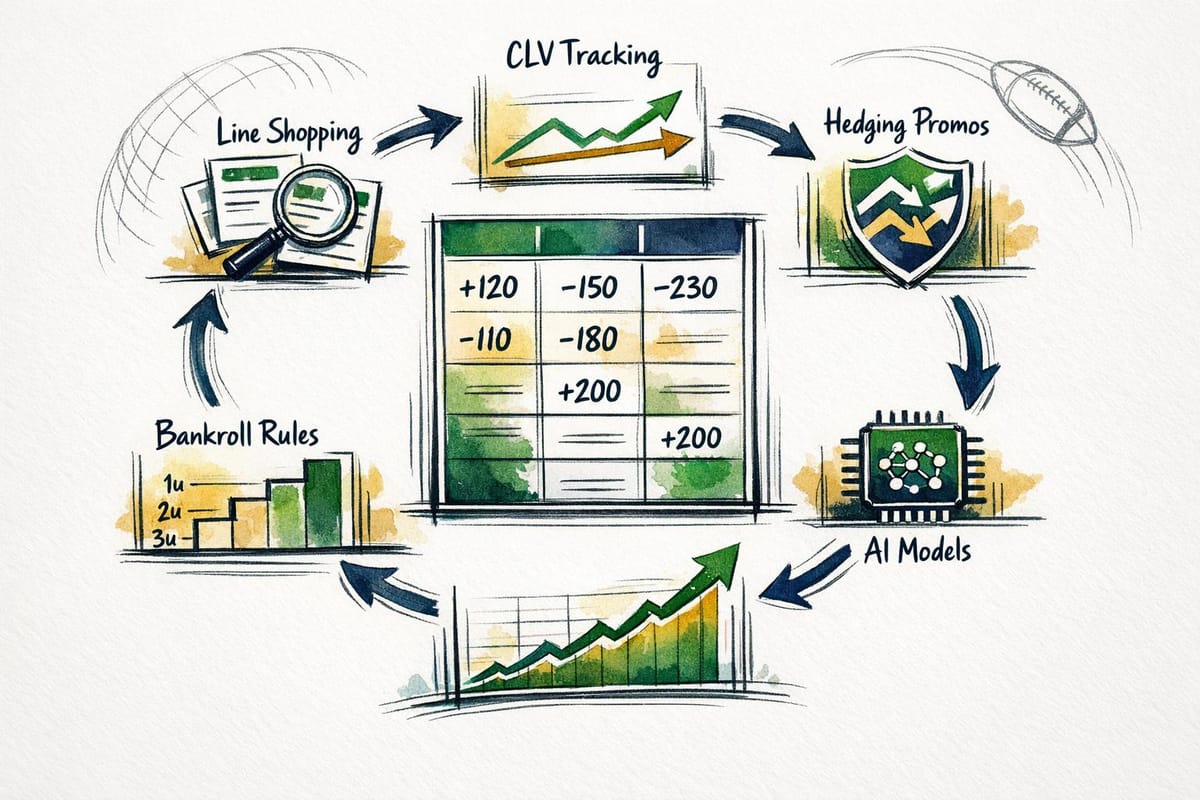
Want to win more bets? Focus on +EV betting. Positive Expected Value (+EV) is all about finding bets where your odds of winning are better than what the sportsbook suggests. Here's how you can get started:
- Understand EV: Calculate EV using this formula:
(Win Probability × Profit) - (Loss Probability × Stake). For example, a $100 bet at +150 odds with a 65% win chance gives an EV of +$62.50. - Shop for Odds: Compare odds across sportsbooks. Even small differences in odds can improve your profits over time.
- Track Closing Line Value (CLV): Measure how your odds compare to the final market odds. Beating the closing line consistently is a sign you're making smart bets.
- Use Promotions Wisely: Turn bonuses and free bets into guaranteed profits through hedging strategies.
- Leverage Data and AI: Use tools to analyze probabilities and find inefficiencies in sportsbook odds.
- Manage Your Bankroll: Bet only 1–2% of your bankroll per wager to minimize risk and protect profits.
Key takeaway? Betting with +EV strategies isn’t about luck - it’s about math, discipline, and long-term growth.
How I Made $700,000 Positive EV Sports Betting: Full Tutorial (Strategy, Settings & More!)
1. Compare Odds Across Multiple Sportsbooks
Shopping for the best odds across different sportsbooks can significantly impact your overall returns. Since sportsbooks use various models to set their odds, you’ll often find differences for the same bet. For instance, a wager listed at -110 at one sportsbook might be available at -105 elsewhere. While this might seem minor, those small differences add up over time.
Even slight improvements in odds - say, 1–3% - can make a noticeable dent in the house edge. For example, a standard -110 point spread carries about a 4.8% vig. If you’re wagering $1,000 a month, a 5% edge could translate to an extra $50 in profit. Over time, these incremental gains can make a big difference.
"Line shopping is non-negotiable for serious bettors." - Jimmy Boyd, BoydsBets
To maximize your chances of finding value, maintain accounts with multiple sportsbooks so you can act quickly when favorable odds appear. Use odds from "sharp" sportsbooks as a benchmark. When recreational sportsbooks offer odds better than the sharp consensus, it’s often a sign of a positive expected value (+EV) opportunity.
Timing is also crucial. Lines released early in the week are often less refined because sharp bettors haven’t influenced them yet. Keep an eye on how your bets compare to the closing line - the final odds before the event starts. Consistently beating the closing line is one of the clearest signs that you’re finding value. Remember, at standard -110 odds, you need to win 52.4% of your bets just to break even. Every improvement in pricing pushes you closer to profitability. By prioritizing line shopping, you’re laying the groundwork for long-term success.
2. Track Your Closing Line Value
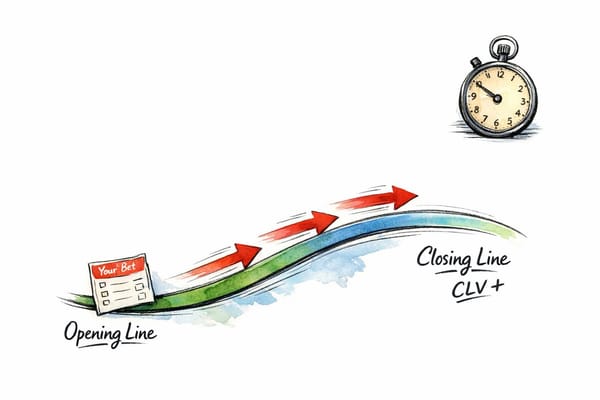
Closing Line Value (CLV) measures the difference between the odds you locked in and the final odds just before the game starts. Essentially, it shows if you managed to snag a better deal before the market adjusted. The closing line reflects all the latest information - like injury updates, weather conditions, and sharp money - making it the most accurate gauge of true probability.
If you're consistently beating the closing line, it means you're spotting value before the market corrects itself. Here's an interesting comparison: A bettor with a 49% win rate but a +3.2% CLV is set up better for long-term success than someone with a 56% win rate and a –1.5% CLV. Why? The first bettor is uncovering real value, while the second is just riding on luck.
"CLV strips away the noise of variance and focuses on what matters - are you consistently finding prices that are better than the market's final assessment?" – Tom Hartley, OddsNotifier
To track CLV, keep detailed records for each bet: note the odds you took, the time you placed the bet, and the closing odds from a sharp sportsbook. You can calculate CLV using this formula:
(Your Odds / Closing Odds - 1) x 100.
For instance, if you bet on the Bills at –5.5 and the line closes at –7, you've gained 1.5 points of value.
A solid CLV range is typically between +2% and +5%, which often leads to strong long-term profits. Even if a bet loses, a positive CLV indicates a sound betting approach. Sportsbooks recognize this too - they're known to limit accounts not necessarily because of winnings, but because those bettors consistently beat the closing line. Use your CLV data as a cornerstone for refining your betting strategies with professional-grade analytics.
3. Convert Promotions Into Profit
Turning sportsbook promotions into profit is a beginner-friendly way to gain an edge using data. Bonuses, free bets, and risk-free offers from sportsbooks present real opportunities for positive expected value (+EV) when paired with hedging strategies. The idea is simple: place your promotional credit on one outcome and use real money to bet on the opposite result at a different sportsbook. This guarantees a profit, no matter the outcome.
Here’s how it works: if you receive a free bet, place it on a high-odds underdog to maximize its potential value. For deposit bonuses with rollover requirements, arbitrage betting across multiple sportsbooks can cover every possible result, ensuring a return.
Another effective tactic is parlay hedging. If three out of four legs in your parlay bet have already won, you can calculate the stake needed to bet on the opposite side of the final leg. This locks in a profit regardless of the outcome. Using a hedge calculator makes this process straightforward and precise.
To confirm a promotion is genuinely +EV, compare the promotional odds to those offered by market-maker sportsbooks like Bookmaker or Circa. If the promotional odds are better than the fair market price, you’ve identified a solid edge. Timing is also critical - jumping on promotions right after breaking news, such as a key player being ruled out, can secure value before the odds adjust.
Tools like WagerProof simplify this entire process with features like AI-powered odds analysis and a built-in hedge calculator. Once you’ve converted promotions into profit, the next step is learning how to protect those gains through effective bankroll management.
"Positive EV = Long-term Profit. Even if you lose individual bets, consistently betting on +EV opportunities will make you money over hundreds of bets." – OpenWager
4. Apply Statistical Models and AI Analysis
Statistical models are key to spotting +EV bets by comparing the true probability of an outcome against the sportsbook's odds, which always include a profit margin (known as the vig or overround). When a model identifies that the true probability is higher than the implied probability set by the sportsbook, you've uncovered a +EV opportunity. These tools work hand-in-hand with strategies like line shopping and monitoring closing line value, automating the process of identifying value bets.
For beginners, the biggest hurdle is the complexity of building accurate models. This involves sifting through vast datasets - everything from historical performance and team metrics to injury updates, weather conditions, and lineup changes. AI tools, such as WagerProof's research agents, simplify this process by analyzing these datasets automatically. These agents can be customized with over 50 adjustable parameters, including risk tolerance, sport preferences, and betting styles. Plus, their results are fully transparent and publicly accessible, so you can track their performance over time without worrying about manipulated records.
Another helpful tool is WagerBot Chat, which connects to live professional data sources to provide real-time answers. You can ask it straightforward questions like, "Should I bet on the Lakers tonight?" and it will pull together injury updates, weather conditions, odds changes, and model predictions into one comprehensive analysis. This feature gives beginners a timing advantage, as the AI identifies opportunities the moment data shifts, allowing you to act before sportsbooks update their lines.
WagerProof's Model Aggregator takes things a step further by combining predictions from over 50 statistical models. By pooling these outputs, it reduces the risk of relying on a single model's errors. The Edge Finder then compares these aggregated predictions against current market odds, flagging bets where multiple models align on a value opportunity. This is especially useful in high-efficiency markets like the NBA, where rapid adjustments to breaking news can make or break a bet.
For those just starting out, focusing on soft markets can be a game changer. These include college sports, player props, and smaller leagues, where sportsbooks tend to react more slowly to new information. While these markets often have higher overrounds, they also present more inefficiencies that AI tools can exploit before the lines are adjusted. For beginners, this approach not only simplifies the complexity of AI-driven analysis but also enhances your timing advantage - both of which are critical for successful +EV betting. Using these insights effectively lays the groundwork for disciplined bankroll management, ensuring your profits are well-protected.
Manage Your Bankroll to Protect Profits
Flat Betting vs Kelly Criterion Bankroll Management Comparison
Identifying +EV bets is only part of the equation. To truly benefit from your edge, you need to manage your bankroll effectively. One of the biggest pitfalls for beginners is betting too much on individual wagers. Even with a genuine edge, this can significantly increase risk. A safer approach is to bet just 1–2% of your bankroll per wager and ensure your combined exposure stays under 20–25% when placing multiple bets. This method helps you manage simultaneous wagers and adjust as your bankroll grows or shrinks.
For instance, if you’re placing bets on five games and using 2% units, you’re putting 10% of your bankroll on the line. To minimize risk, consider lowering your individual stakes or ensuring your total exposure doesn’t exceed 20–25% of your bankroll. This becomes even more important with correlated bets, like a player prop and a team total from the same game. These should be treated as a single, larger wager to avoid overexposure.
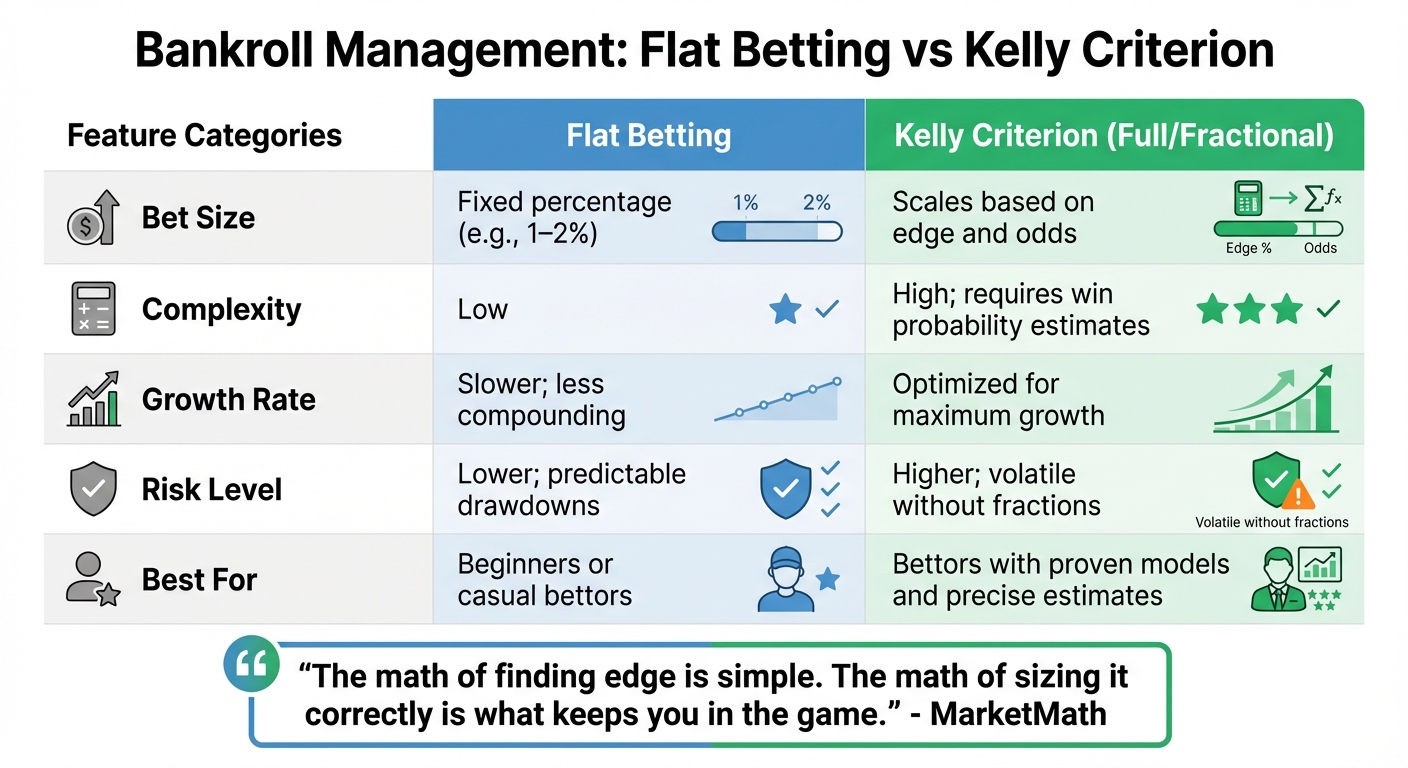
Flat betting is a consistent and beginner-friendly strategy. However, as your confidence in estimating probabilities grows, you might explore the Kelly Criterion. This method adjusts bet sizes based on your edge and the odds. While the full Kelly approach maximizes growth, it can lead to significant drawdowns - up to 50%. That’s why many experienced bettors prefer fractional Kelly, such as Half or Quarter Kelly, to balance growth with risk. These strategies work well alongside diversified betting, which spreads risk across various markets.
"The math of finding edge is simple. The math of sizing it correctly is what keeps you in the game." - MarketMath
| Feature | Flat Betting | Kelly Criterion (Full/Fractional) |
|---|---|---|
| Bet Size | Fixed percentage (e.g., 1–2%) | Scales based on edge and odds |
| Complexity | Low | High; requires win probability estimates |
| Growth Rate | Slower; less compounding | Optimized for maximum growth |
| Risk Level | Lower; predictable drawdowns | Higher; volatile without fractions |
| Best For | Beginners or casual bettors | Bettors with proven models and precise estimates |
Diversification is another key to managing risk. Spread your bets across different sports, markets, and events to reduce the impact of variance in any one area. If you’re still refining your ability to estimate win probabilities, stick with flat betting at 1–2% per wager until you’re confident in your edge. When you’re ready to scale, starting with Quarter Kelly offers a safer way to grow your bankroll while outperforming flat betting. Proper bankroll management doesn’t just protect your profits - it builds the discipline you need for long-term success in +EV betting.
Conclusion
Positive EV betting offers a mathematical edge that grows over time with consistent wagering. The strategies discussed here provide a clear path: compare odds across sportsbooks, measure your performance using Closing Line Value (CLV), turn promotions into actual profit, and use statistical models to spot inefficiencies in the market. The core idea is straightforward - find opportunities where your calculated probability of winning is higher than what the odds suggest.
But spotting value is just the beginning. Success in this approach requires discipline and consistency. This means committing to thorough research, accurate probability assessments, and carefully removing the sportsbook's vig. Tools like WagerProof's AI agents and WagerBot Chat can simplify this process by analyzing data and uncovering hidden opportunities, reinforcing the importance of a data-driven strategy. Managing risk is equally critical to securing your edge.
Effective bankroll management is non-negotiable. Even a 5% edge can be wiped out by poor staking decisions. Stick to betting 1–2% of your bankroll per wager, spread your bets across different markets, and resist the urge to chase losses. As Jack Andrews from Unabated aptly says, "Positive expected value betting... is the cornerstone of any serious betting pursuit". The goal isn’t to win big today - it’s to stay in the game long enough for your edge to pay off.
Think of +EV betting as an investment. Track every wager, continuously refine your probability estimates, and trust the math. By treating your bets as calculated investments rather than random gambles, you can turn betting into a disciplined, strategic endeavor that leads to sustainable, long-term profits.
FAQs
How do I estimate win probability accurately?
To calculate win probability effectively, start by converting betting odds into implied probabilities. However, these raw probabilities include the sportsbook's built-in profit margin, often referred to as the vig or juice. To get a clearer picture, you need to adjust for this margin, which gives you the fair market probability - a more accurate reflection of the true chances of an outcome.
Once you have this adjusted probability, you can use it to pinpoint positive expected value (+EV) bets. This method ensures your decisions are grounded in the actual market consensus, not distorted by the bookmaker's pricing strategy.
What CLV should I target as a beginner?
As someone just starting out, aim for a positive expected value (CLV) in the range of +10% to +20%. This will help establish a solid foundation for long-term success. However, your specific target can depend on factors like your risk tolerance and overall betting strategy. Adjust your approach to match your personal goals and comfort level.
How do I hedge free bets without risking my bankroll?
To make the most of free bets without putting your bankroll at risk, the key is to balance your exposure while locking in potential profits. Begin by spotting positive EV opportunities - these are bets with a higher expected value. Once identified, you can hedge by placing counter-bets on opposing outcomes using different sportsbooks. This way, no matter the result, you either secure a profit or limit any potential loss. Be sure to calculate the combined payouts carefully to ensure your hedge fully covers your stake and sticks to smart bankroll management practices.