
5 Steps to Quantify Betting Edge with Monte Carlo
Monte Carlo simulations reveal your true betting edge, quantify variance, and guide bankroll and staking choices to manage risk over thousands of bets.
Monte Carlo simulations reveal your true betting edge, quantify variance, and guide bankroll and staking choices to manage risk over thousands of bets.

Missouri's early sports betting losses mean no tax revenue for schools as March Madness raises integrity concerns.

Spot sharp money and key-number line moves—learn RLM, steam moves, ticket vs. handle signals and timing to capture betting value.
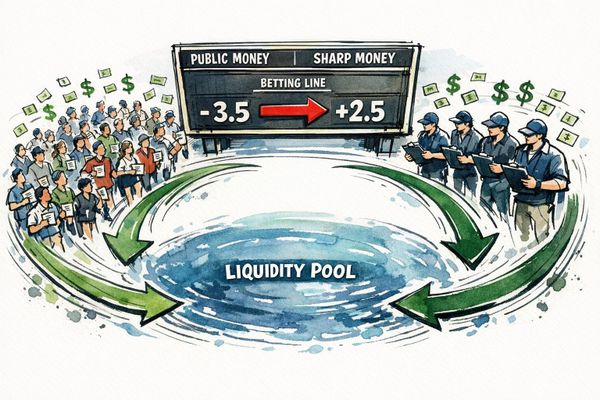
How sharp (professional) vs public bets move lines, affect liquidity, and create value using ticket/money splits and reverse line movement.

Validate betting models with walk‑forward backtests, Monte Carlo simulations, scenario analysis, and Bayesian methods to spot overfitting and manage bankroll risk.
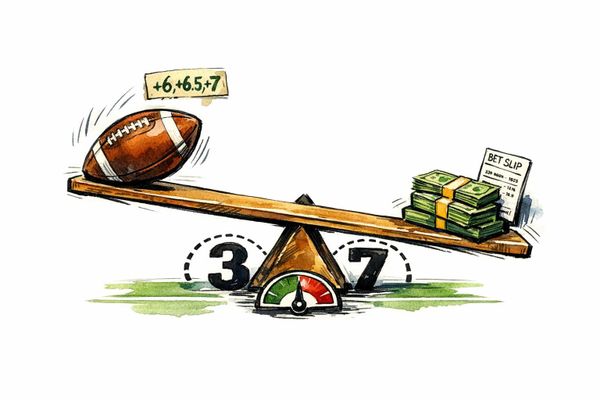
How NFL teaser bets trade bigger win chances for lower payouts — learn break-even rates, key-number strategy (3 & 7), common mistakes, and data tools.

Detect and manage concept drift in betting models with ICM, ADWIN and Page-Hinkley; use real-time data, ensembles, and retraining to maintain predictive edge.

How travel, time zones and back-to-backs reduce player and team performance—and where bettors can find mispriced edges in sportsbooks and prediction markets.

Checklist to evaluate a betting model’s scalability: EV stability, probability calibration, bankroll and bet sizing, diversification, metrics, and operational resilience.

Understanding correlation turns same-game parlays from guesswork into strategic bets by revealing when sportsbooks overcharge for linked outcomes.

How line movement and reverse line movement expose sharp bettors, timing edges, and tools to spot value in real-time prediction markets.

Short-term ROI is noisy and misleading; long-term ROI reveals your true betting edge—learn why sample size, bankroll rules, CLV, and tracking matter.