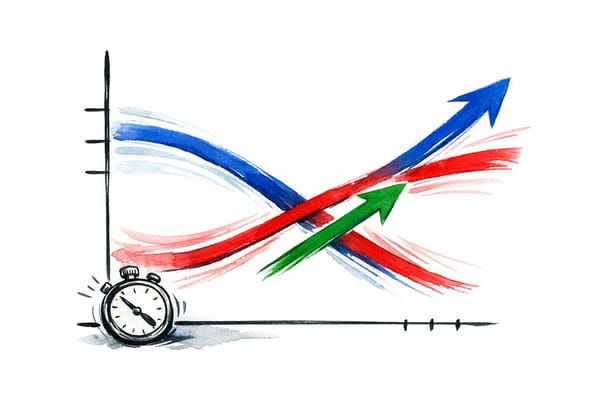
Prediction Markets: Exploit Line Movement
How line movement and reverse line movement expose sharp bettors, timing edges, and tools to spot value in real-time prediction markets.
How line movement and reverse line movement expose sharp bettors, timing edges, and tools to spot value in real-time prediction markets.

Short-term ROI is noisy and misleading; long-term ROI reveals your true betting edge—learn why sample size, bankroll rules, CLV, and tracking matter.

How live betting models use millisecond in-play data, Bayesian updating, market signals and safeguards to update odds, detect value, and manage risk.

Compare five top EV tools for sports betting — from AI-driven scanners to simple calculators, with notes on accuracy, inputs, and bankroll integration.

Compare the Kelly Criterion and dynamic bankroll adjustment: trade-offs between long-term growth, volatility, and practical risk control for bettors.
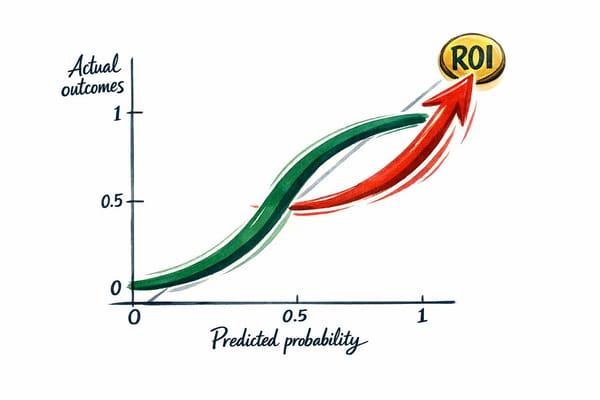
Calibrated probabilities, not raw accuracy, drive betting profits. Learn EV math, break-even odds, bet sizing, and why calibration improves ROI.

Learn the key features that keep gambling in check — deposit/wager limits, time controls, self-exclusion, activity tracking, and AI alerts.
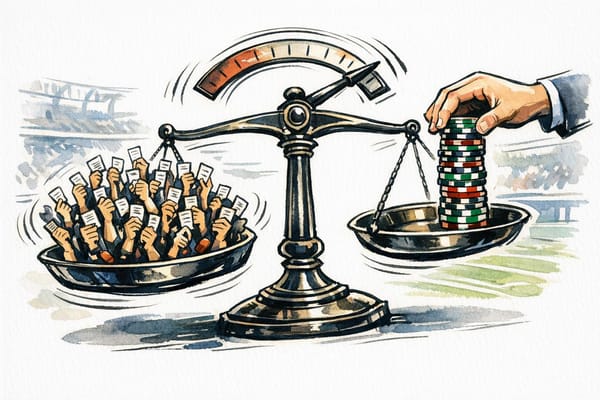
How public betting skews odds, why sharp money moves lines, and when to time bets using ticket vs. money splits and data tools.
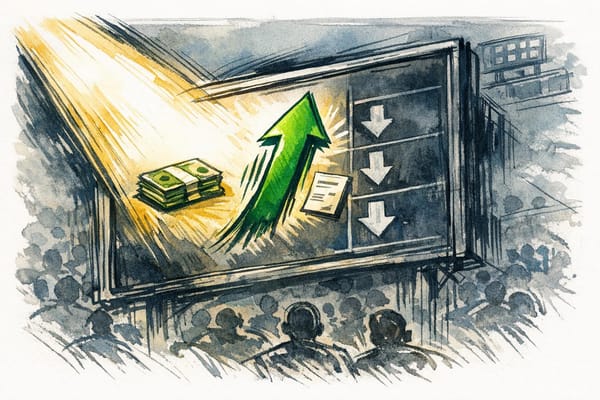
Spot professional bettors using reverse line movement, money-vs-ticket gaps, steam moves and real-time tools to track sharp money across sportsbooks.
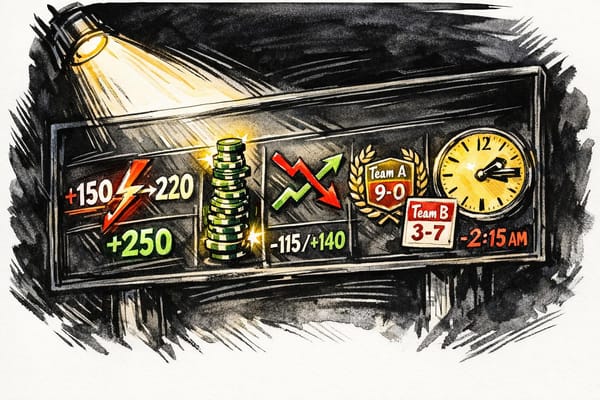
Five signs—sharp line moves, high-stakes volume, odd bet patterns, expert mismatches, and unusual timing—to spot insider bets or market manipulation.

Clear comparison of Expected Value (EV) and Edge—how to calculate them, find +EV bets, size wagers with Kelly, and manage bankroll.
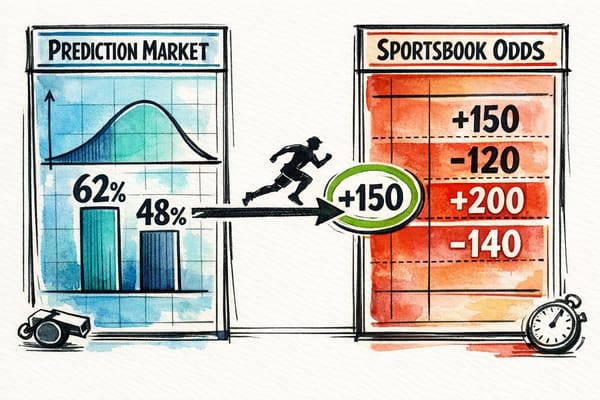
How prediction markets differ from sportsbook odds—pricing, fees, probability accuracy, and spotting mismatches to find value and hedge bets.