
Early vs. Late Season Betting: Key Differences
Early- and late-season betting require different approaches—exploit early market inefficiencies and late-season motivation, injuries, and line movement for value.
Early- and late-season betting require different approaches—exploit early market inefficiencies and late-season motivation, injuries, and line movement for value.
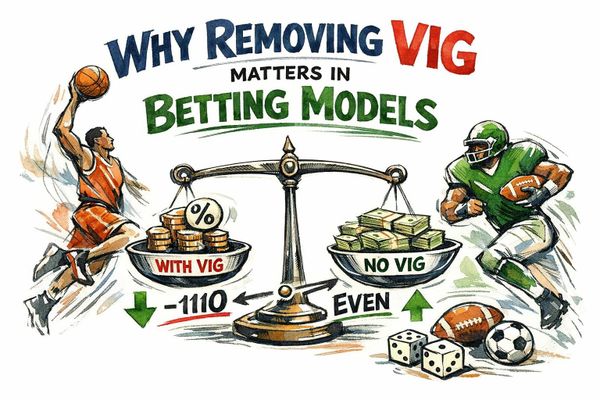
Explain sportsbook vig, methods to de-vig (multiplicative, power, Shin), and how fair odds improve model accuracy and reveal value bets.

Five steps to build and test predictive sports-betting models: set goals, gather verified data, find value with EV, backtest strategies, and manage bankroll with Kelly.
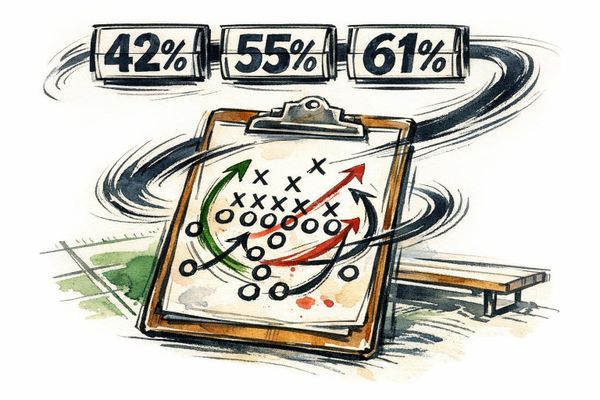
How prediction markets and sportsbooks adjust after midseason coaching changes—and where bettors can find short-term value in mismatched odds.
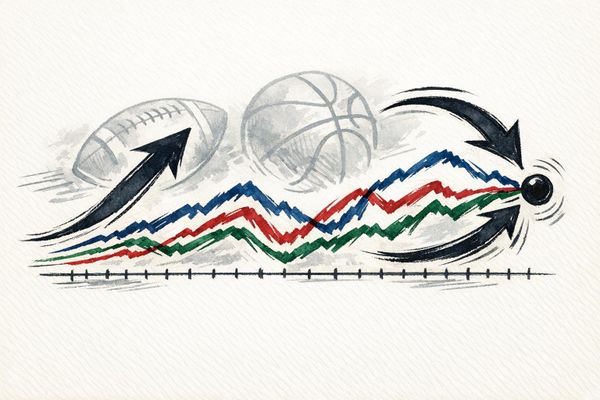
Understand historical line movement, reverse line movement, steam moves, and closing line value to spot sharp money and market inefficiencies.
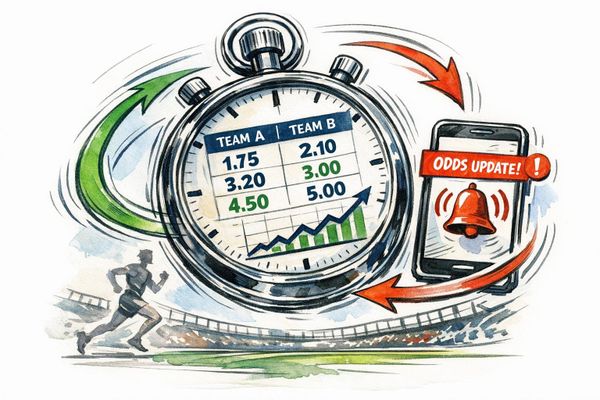
AI streamlines sports betting research—running fast simulations, tracking odds, sending real-time alerts, and cutting manual analysis time.

Compare five classification models for sports match predictions and learn how calibrated probabilities improve betting decisions.

Use real-time odds, RLM and EV thresholds to spot mispriced bets, receive alerts, and manage execution risk.
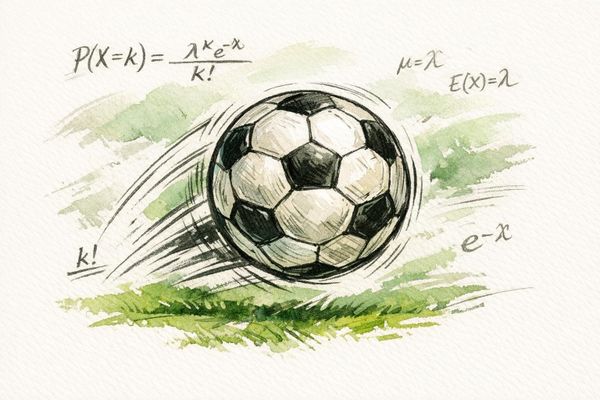
Use the Poisson formula to estimate match probabilities, convert them to fair odds, and spot value bets—especially effective in low-scoring sports like soccer.
Understand win-probability error margins, how to remove vig, calculate fair odds, and use EV thresholds to spot real value bets.
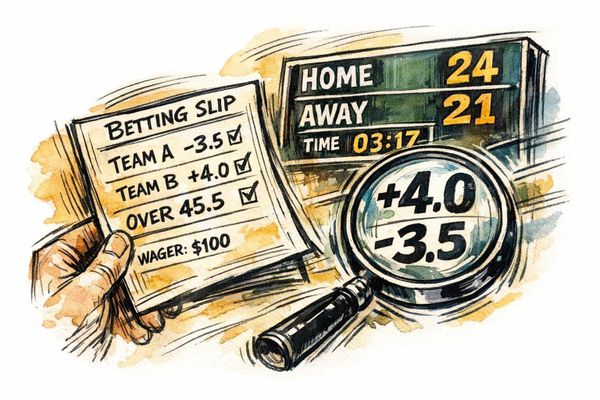
Spot and act on sportsbook odds gaps using real-time monitoring, EV calculations, and disciplined bankroll and execution strategies.
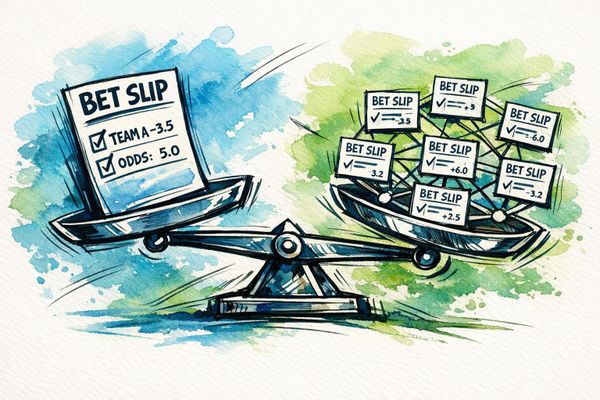
Multi-model betting systems outperform single models by improving calibration, reducing errors, and uncovering value bets—boosting ROI and reliability.